The AI Revolution in Canadian Healthcare: 5 Game-Changing Breakthroughs Transforming Patient Care
Discover how Health Canada-approved AI tools achieving 93% diagnostic accuracy are revolutionizing patient care across Canada while meeting strict PIPEDA compliance standards.

AI-powered diagnostic tools are transforming Canadian healthcare delivery
The Stethoscope Moment: When AI Becomes Your Clinical Partner
Picture this: It’s 3 AM in the emergency department at Toronto General Hospital. A patient arrives with chest pain, vitals are concerning, and you need answers fast. Instead of waiting precious minutes for radiology reports, an AI assistant instantly flags a potential pulmonary embolism from the CT scan with 93% accuracy, automatically prioritizes the case, and even suggests the optimal treatment protocol based on the latest Canadian clinical guidelines.
This isn’t science fiction—it’s happening right now in Canadian hospitals from Vancouver to Halifax, and it’s just the beginning of our healthcare system’s AI revolution.
Why Canada is Leading the AI Healthcare Revolution
As Canadian healthcare professionals, we’re witnessing something unprecedented: artificial intelligence isn’t replacing our expertise; it’s amplifying it in ways that seemed impossible just months ago. With Health Canada’s comprehensive Machine Learning-Enabled Medical Device (MLMD) guidance released in February 2025, and world-class AI research institutes like the Vector Institute, Mila, and Amii leading global innovation, Canada is uniquely positioned to lead the responsible adoption of AI in healthcare.
- Health Canada-approved AI diagnostic tools with proven clinical efficacy
- PIPEDA-compliant solutions protecting patient privacy
- World-class Canadian AI research ecosystem
- Provincial health systems actively piloting AI integration
From diagnostic AI tools that detect diseases faster than ever before to advanced reasoning models that help us make complex clinical decisions, AI is becoming the ultimate clinical partner we never knew we needed. Let’s explore the five most significant AI breakthroughs that are transforming Canadian healthcare right now—and why they matter for every healthcare professional, regardless of your specialty.
1. Health Canada-Approved Diagnostic AI Reaches Human-Expert Level Performance
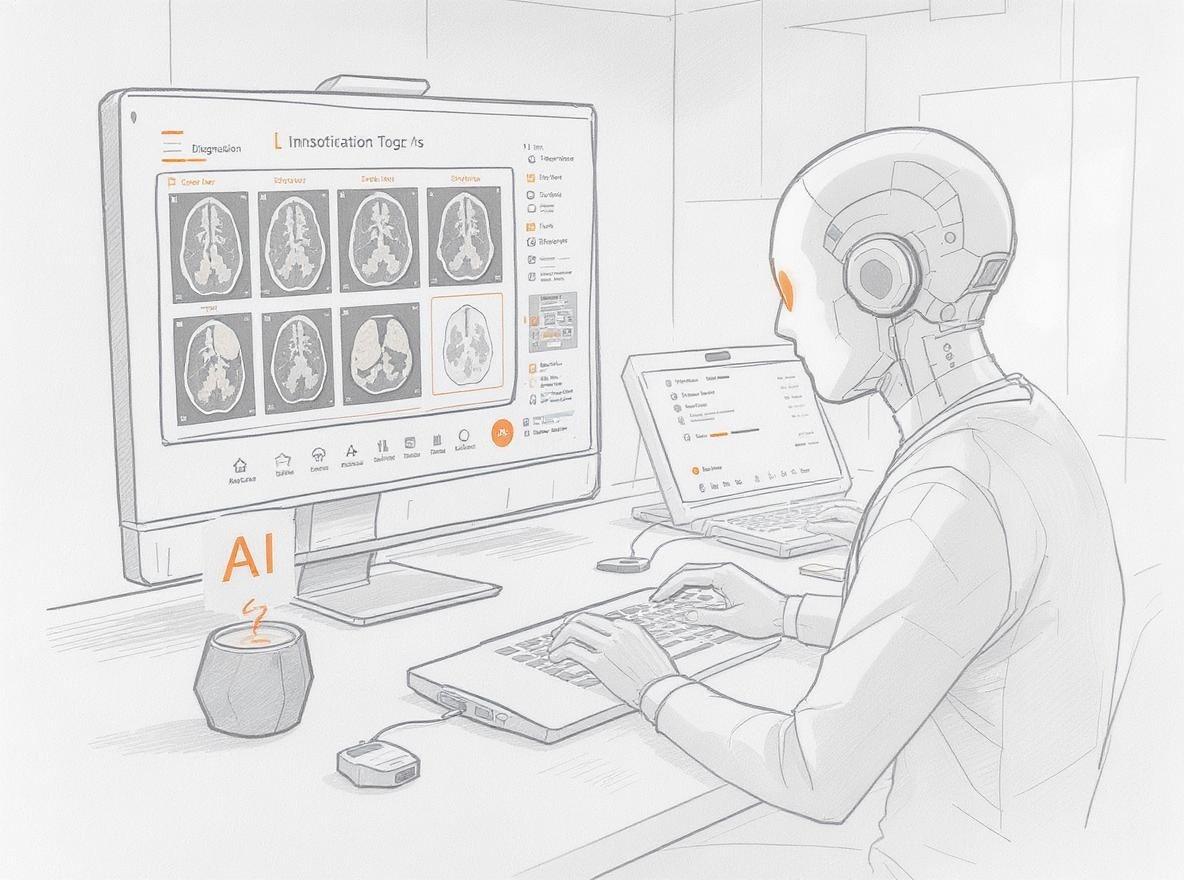
AI diagnostic systems can analyze medical imaging with unprecedented speed and accuracy
The biggest game-changer in Canadian healthcare AI isn’t just about speed—it’s about precision that rivals (and sometimes surpasses) human experts. Under Health Canada’s new MLMD regulatory framework, diagnostic AI tools are now classified as Class II, III, and IV medical devices, ensuring they meet the same rigorous safety and efficacy standards as traditional medical equipment.
What Makes This Revolutionary:
Clinical Performance:
- • 93% sensitivity rates for detecting pulmonary embolisms
- • 30% reduction in turnaround time for critical cases
- • Always-on analysis that never gets tired or distracted
- • Seamless integration with existing PACS and EMR systems
Canadian Regulatory Compliance:
- • Health Canada MLMD approval required
- • PIPEDA privacy protection built-in
- • Provincial health system integration certified
- • Ongoing post-market surveillance mandated
But here’s what’s really exciting: these aren’t just diagnostic tools—they’re intelligent triage systems that understand urgency. When an AI system flags a potential stroke, it doesn’t just identify the problem; it automatically prioritizes the case, alerts the stroke team, and even pulls relevant patient history to streamline decision-making.
Impact Across Different Healthcare Stakeholders:
Healthcare Workers
Fewer missed diagnoses, faster treatment initiation, more time for direct patient care
SMEs
Cost-effective diagnostic solutions with subscription models reducing diagnostic costs by up to 40%
Time-Savers
Diagnostic reporting time reduced from 20 minutes to 30 seconds while improving accuracy
Upskillers
AI-assisted training programs helping healthcare professionals develop new competencies
2. PIPEDA-Compliant Advanced Voice AI Transforms Patient Interactions
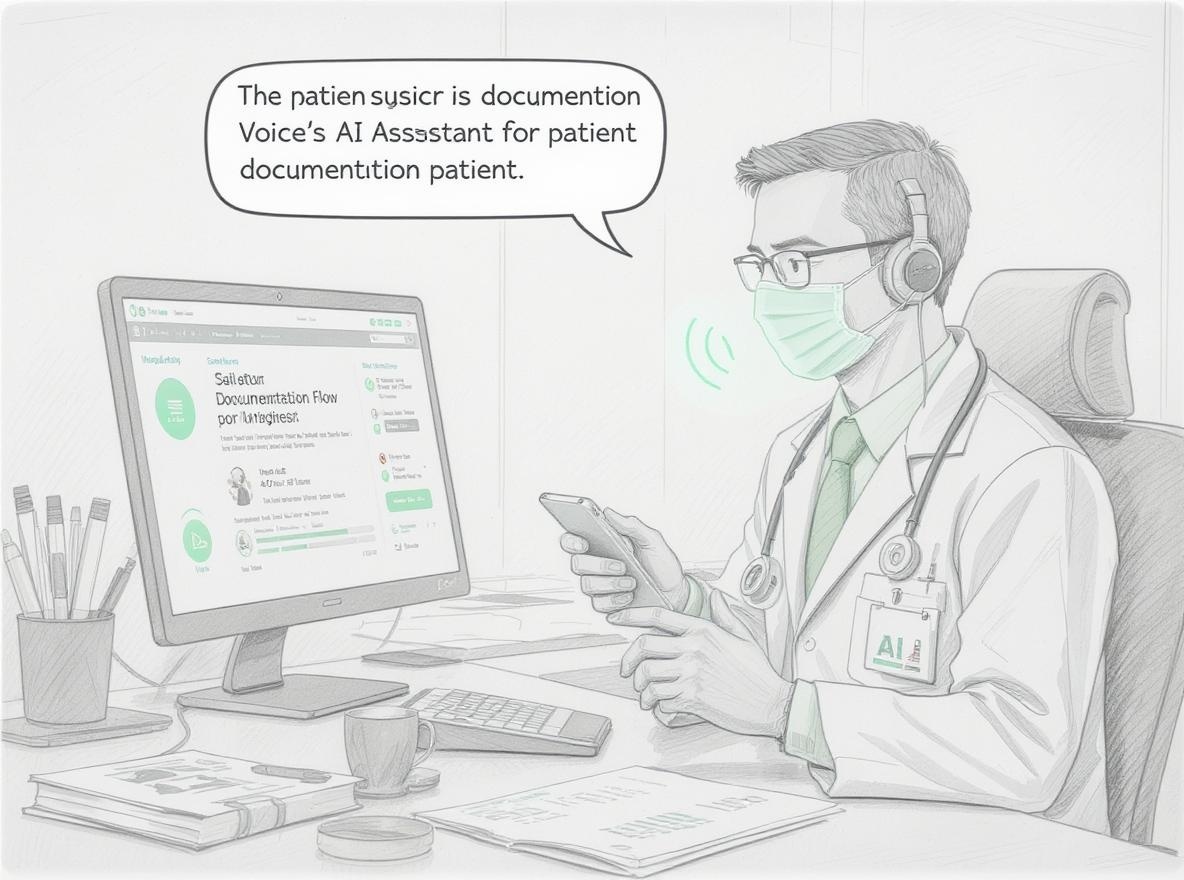
Voice AI assistants are revolutionizing clinical documentation and patient communication
Remember when voice assistants could barely understand simple commands? The latest generation of healthcare-focused voice AI has completely transformed what’s possible in Canadian clinical settings, all while maintaining strict compliance with PIPEDA privacy requirements.
Breakthrough Features for Canadian Healthcare:
Real-time Language Translation
Perfect for Canada’s bilingual healthcare system – seamlessly translate between English and French, plus support for Indigenous languages and immigrant communities
Emotional Intelligence
Recognizes tone, pace, and non-verbal cues crucial for quality patient care
Automated Medical Documentation
Generates clinical notes automatically from conversations while maintaining PIPEDA compliance
Picture a scenario where a French-speaking patient arrives at a hospital in Ontario. The AI voice assistant can translate your questions into French in real-time, translate their responses back to English, and simultaneously generate clinical notes—all while maintaining the nuance and emotional context crucial for quality care.
The Impact on Canadian Healthcare Workflow:
Efficiency Gains:
- • 75% reduction in documentation time
- • Improved patient engagement due to better eye contact
- • Enhanced accuracy in clinical notes
- • Multilingual support breaking down language barriers
Canadian Compliance:
- • PIPEDA privacy protection built-in
- • Integration with Canadian EMR systems
- • Provincial health information act compliance
- • Data sovereignty maintained within Canada
3. Canadian AI Research Institutes Drive Global Healthcare Innovation
Canada’s AI research ecosystem isn’t just participating in the healthcare AI revolution—we’re leading it. The recent partnership between the CAN Health Network and the Vector Institute represents a pivotal moment in Canadian healthcare AI development.
Canada’s AI Research Powerhouses:
Vector Institute (Toronto)
- • 200+ AI researchers
- • Healthcare AI partnerships
- • Clinical decision support systems
- • Medical imaging innovations
Mila (Montreal)
- • World’s largest deep learning lab
- • Drug discovery AI research
- • Predictive healthcare modeling
- • Responsible AI development
Amii (Edmonton)
- • 15+ years of ML innovation
- • Healthcare automation research
- • Real-world AI deployment
- • Industry partnerships
These institutes aren’t just conducting theoretical research—they’re developing practical solutions that are being implemented in Canadian healthcare systems today. The Vector Institute’s recent partnership with the CAN Health Network is accelerating the development of Canadian-built AI solutions specifically designed for our healthcare landscape.
4. WELLSTAR Nexus AI: Canada’s First Fully Integrated Healthcare AI Platform
In May 2025, WELLSTAR Technologies launched Nexus AI™, representing a watershed moment for Canadian healthcare technology. This isn’t just another AI tool—it’s the first Canadian-built artificial intelligence platform specifically designed to integrate seamlessly with popular Canadian EMR systems while maintaining full PIPEDA compliance.
What Makes Nexus AI Revolutionary for Canadian Healthcare:
Seamless Canadian EMR Integration
Works natively with Canadian electronic medical record systems, eliminating the integration challenges that have plagued healthcare AI adoption
Next-Generation Ambient Scribe Capabilities
Provides real-time clinical documentation with a reimagined user experience designed for Canadian healthcare workflows
Built-in PIPEDA Compliance
Designed from the ground up to meet Canadian privacy requirements, with data sovereignty maintained within Canada
Early adopters of Nexus AI are reporting remarkable results: 75% reduction in clinical documentation time, improved patient satisfaction scores due to increased face-to-face interaction time, and enhanced clinical note accuracy. Most importantly, it’s designed by Canadians, for Canadians, understanding the unique challenges of our healthcare system.
5. Advanced AI Reasoning Models Revolutionize Clinical Decision-Making
The introduction of Google’s Gemini 2.5 Deep Think and OpenAI’s o3-pro model represents a quantum leap in AI’s ability to reason through complex medical scenarios. These aren’t just powerful search engines—they’re clinical reasoning partners that can work through differential diagnoses, suggest treatment modifications based on patient-specific factors, and even help identify potential complications before they occur.
What Makes These Reasoning Models Special:
Clinical Reasoning Capabilities:
- • Multi-step clinical reasoning considering multiple hypotheses
- • Evidence-based recommendations tied to Canadian clinical guidelines
- • Complex case analysis factoring patient history and comorbidities
- • Continuous learning from new medical literature
Real-World Applications:
- • Personalized treatment planning for complex cases
- • Drug interaction checking with sophisticated analysis
- • Clinical guideline integration with patient-specific modifications
- • Continuing education with case-based learning scenarios
For Canadian healthcare workers, these tools act like having a senior consultant available 24/7, helping validate clinical decisions and suggesting evidence-based alternatives while respecting Canadian clinical guidelines and protocols.
Getting Started: Your Canadian AI Implementation Roadmap
Ready to leverage these AI breakthroughs in your Canadian healthcare setting? Here’s your practical roadmap that considers Canadian regulatory requirements and healthcare system realities:
Phase 1: Assessment and Planning (Weeks 1-2)
- • Evaluate current workflow inefficiencies and pain points
- • Research Health Canada-approved AI solutions that integrate with your existing systems
- • Assess budget and ROI expectations based on Canadian healthcare funding models
- • Identify key stakeholders and change champions within your organization
- • Review PIPEDA compliance requirements for your specific use case
Phase 2: Pilot Implementation (Weeks 3-8)
- • Start with one high-impact, low-risk AI tool (consider diagnostic AI or clinical documentation)
- • Ensure the solution has Health Canada approval and PIPEDA compliance
- • Train a small group of early adopters from different departments
- • Measure baseline metrics for comparison (documentation time, diagnostic accuracy, patient satisfaction)
- • Establish feedback loops with Canadian AI vendors for ongoing support
Phase 3: Scale and Optimize (Months 3-6)
- • Expand successful AI tools to additional departments based on pilot results
- • Add complementary AI solutions (e.g., if diagnostic AI succeeded, add voice documentation)
- • Develop internal training programs with Canadian healthcare context
- • Establish ongoing evaluation metrics aligned with Canadian healthcare quality indicators
- • Share learnings with other Canadian healthcare organizations
Phase 4: Advanced Integration (Months 6-12)
- • Implement more sophisticated AI reasoning tools for complex decision support
- • Develop custom integrations with your specific Canadian healthcare workflows
- • Create AI governance policies aligned with Canadian healthcare standards
- • Plan for emerging AI technologies and maintain competitive advantage
- • Consider partnerships with Canadian AI research institutes for cutting-edge solutions
Frequently Asked Questions: AI in Canadian Healthcare
Are AI healthcare tools approved by Health Canada?
Yes! Health Canada released comprehensive guidance in February 2025 for Machine Learning-Enabled Medical Devices (MLMDs). Many AI diagnostic tools now have Health Canada approval as Class II, III, and IV medical devices. Tools like those from Aidoc and WELLSTAR’s Nexus AI have received proper regulatory approval. Always verify a tool’s Health Canada approval status before implementation.
How do AI healthcare tools comply with Canadian privacy laws?
Canadian healthcare AI tools must comply with PIPEDA (federal) and provincial privacy acts like PHIPA (Ontario) and PIPA (Alberta). Solutions like PIPEDA-compliant AI scribes and WELLSTAR’s Nexus AI are specifically designed for Canadian privacy requirements, ensuring data sovereignty remains within Canada and all processing meets our strict privacy standards.
Which Canadian provinces are leading AI healthcare adoption?
Ontario, Quebec, and British Columbia are at the forefront, with major health systems implementing AI pilots. The Pan-Canadian AI4H Guiding Principles ensure coordinated adoption across all provinces and territories, with each province adapting implementations to their specific healthcare system needs.
What Canadian companies are developing healthcare AI?
Leading Canadian healthcare AI companies include WELLSTAR Technologies (Nexus AI), companies supported by the Vector Institute in Toronto, Mila in Montreal, and Amii in Edmonton. These represent Canada’s world-class AI research ecosystem developing practical healthcare solutions.
How much do AI healthcare tools cost in Canada?
Costs vary by application. According to McKinsey’s analysis, AI integration could save the Canadian healthcare system billions while improving efficiency. Many tools offer subscription models starting around CAD $5,000-15,000 annually per department, with ROI typically achieved within 6-12 months through improved efficiency and reduced errors.
The Future Is Now: Leading Canada’s Healthcare AI Revolution
The AI revolution in Canadian healthcare isn’t coming—it’s here. With Health Canada’s progressive regulatory framework, world-class research institutes, and innovative companies like WELLSTAR leading the charge, Canada is uniquely positioned to lead the global transformation of healthcare through responsible AI adoption.
The question isn’t whether AI will transform Canadian healthcare—it already is. The question is whether you’ll lead this transformation or be left behind by it.
Start Your AI Journey Today
Immediate Actions:
- • Assess your current AI readiness
- • Join Canadian healthcare AI communities
- • Experiment with Health Canada-approved tools
- • Advocate for AI pilot programs
About This Article
This comprehensive analysis was researched and compiled using the latest AI trends and Canadian healthcare technology developments as of June 2025. All regulatory information has been verified against Health Canada’s official guidance documents and provincial health ministry resources.
Sources: Health Canada MLMD Guidance (February 2025), CDA-AMC 2025 Watch List, Vector Institute Reports, WELLSTAR Technologies Press Releases, McKinsey Healthcare AI Analysis for Canada, Pan-Canadian AI4H Guiding Principles

Recent Comments